


Guest post by Sarah Gerhardt
December might feel slow outdoors, but it’s actually one of the most exciting months for bringing the garden inside. Responsibly foraged foliage and branches can be used to make eco-friendly decorations that enhance your indoor space both visually and with their fragrance. In this blog post, we will look at a few different ideas for sustainable natural winter decoration.
Materials
Gardens, woodlands, hedgerows, and field edges are all great locations for finding winter treasures such as evergreen foliage, delicate twigs, architectural branches, spiky seed heads, and pine and fir cones.
The foliage of both native and non-native evergreen plants offers a great range of materials for winter decorations. Evergreens hold their shape and colour even in deep winter, which makes them ideal for long-lasting indoor decorations.
Examples of evergreen plants that work well for making winter decorations include holly, ivy, fir, pine, cypress, spruce, eucalyptus, box, laurel, rosemary, and bay. The glossy leaves and red or orange berries make holly very versatile for a range of decorative purposes, from wreaths to bouquets. Ivy works well for draping over shelves or creating elegant garlands. The aromatic scent of fir, pine, cypress, and spruce branches instantly evokes winter. The dark foliage of box and laurel adds structure and depth. Rosemary and bay work well in wreaths and in table arrangements and are useful in the kitchen as well. Yew also works well for making winter decorations, but it is highly toxic, so be very careful if you decide to use it, especially if you have small children in the house.
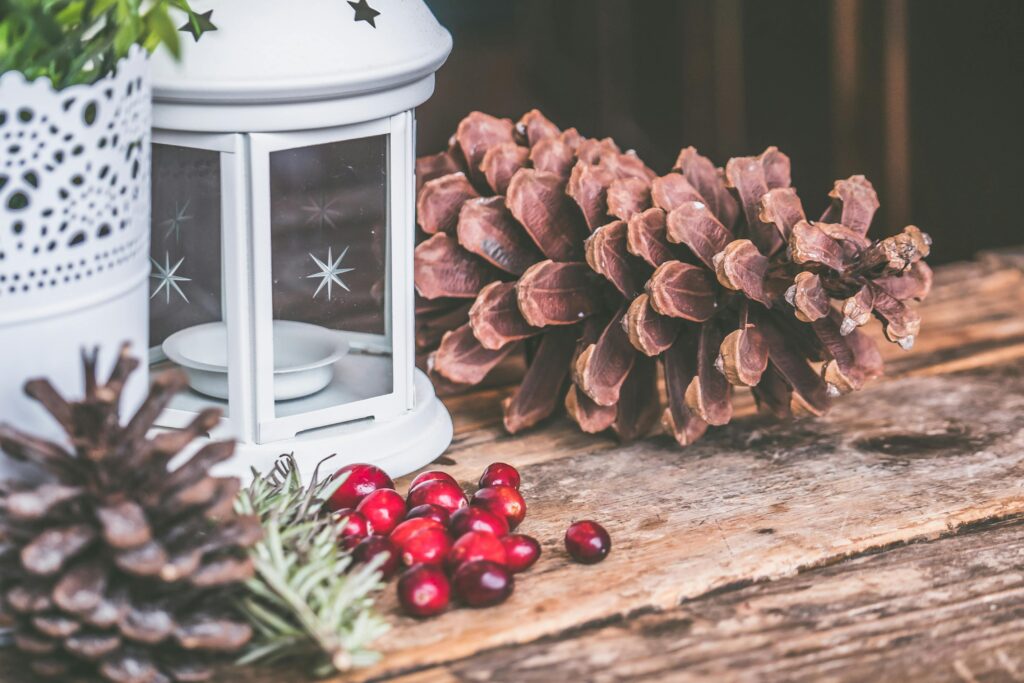
Bare branches and twigs of plants that lose their leaves in winter can also make great decorations. Look out for branches and twigs of oak, birch, willow, hazel, and the red or yellow stems of dogwood. Dried seed heads, such as those of teasel and burdock, as well as pine and fir cones, make great focal points on any display.
A note on responsible foraging
When gathering any materials, especially if they don’t come from your own garden, confirm that you have permission to collect them. Ensure you are not collecting in a conservation site where this is not allowed or on private land without the consent of the owners.
The UK’s wildlife relies on the plants you pick for their survival, especially those that are still producing fruit in winter, such as holly. Only collect flowers, leaves, fruits, and seeds where they are in abundance and leave plenty behind. Bear in mind that you may not be the only person foraging. Make sure you know the plant species you are collecting. This way, you don’t accidentally pick a rare species that is illegal to dig up or remove, and you don’t collect anything that could harm you.
Easy DIY decoration ideas
Wreath
Creating your own door or candle wreath is a tradition many people enjoy during the winter season, whether for holiday decorating or simply to brighten the darker days. You can enhance it by incorporating foraged plants from gardens or the local area.
If you’re building a wreath from scratch, you can use a metal or willow ring as a base or make your own ring using crunched-up newspaper and wire. For a truly handmade version, twine flexible stems and branches into a circular shape and secure them with twine. Plants that work well for this method include ivy, honeysuckle and clematis.
Once your base is in place, build small, bundled sprigs around your structure to cover it as needed. Secure them using wire or twine. Add larger and more showy foliage pieces on top and alternate textures for visual interest. For example, place soft pine needles next to glossy holly leaves. Top your wreath with holly berries or dried seed heads as desired.
Table Centrepieces
A simple and elegant way to create natural winter decorations is to craft a table centrepiece. Lay a selection of greenery along a table runner or arrange it in a low vase, and accent with pinecones or seasonal flowers such as snowdrops and hellebores. Keep in mind that both snowdrops and hellebores are toxic to humans and pets.
Window and Mantel Garlands
These days, festive garlands are so often made from plastic, yet it is quite easy to make your own from natural materials. Ivy, with its long, bendy shoots, is perfect for creating a garland that can be draped over a window or mantel. Select long strands of ivy and weave them around fir branches, securing with wire or twine. Add extra elements such as cones or holly berries. Let the ends trail naturally and keep the garlands asymmetrical for a more rustic look.

Mini Bouquets for Gift Wrapping
Add a personal touch to your gifts by tucking small sprigs of pine, rosemary, or eucalyptus into the ribbon. You can also create tiny bouquets by combining different sprigs and securing them on top of the gift instead of using a ribbon. There is plenty of room for creativity. If you’re giving a cookbook or a kitchen gadget, for example, a bouquet of rosemary, sage and bay leaves keeps the culinary theme going, and the recipient can even use the herbs in the kitchen.
Natural Ornamental Sprays
The simplest way to make natural winter decorations is to select tall, long branches of a conifer, such as a fir or pine, or a plant with interesting bark, like silver birch, and place them in a hallway in a tall jug or vase. This creates a sculptural effect and a festive look with minimum effort.

Tips for Freshness and Longevity
One of the joys of making your own natural decorations is that you can be relatively confident that your plant materials have not been treated with herbicides, preservatives or other additives. Untreated stems, however, may not stay fresh as long.
To prolong the life of your natural winter decorations, always recut stems that you collected before bringing them inside and placing them in water. Fresh cuts allow the stems to take up water more effectively. Keep your decorations away from heat, which dries out the foliage more quickly. Unless your decorations are placed near electronics, it is a good idea to lightly mist them with water every few days. This counteracts the drying effects of warm indoor air.
Celebrate Simplicity
Natural winter decorations don’t have to be elaborate. Often, the most beautiful displays are simple and easy to create. With a little creativity and imagination, we can use abundantly available plant materials to create a cosy winter atmosphere indoors.
About the author: Sarah Gerhardt is a gardener, linguist and punk musician based in Edinburgh. She was head gardener at the Dean Gardens, Edinburgh, for 9 years and runs her own gardening business Gerhardt’s Garden Service. Find out more via her Linktree: https://linktr.ee/gerhardtsgardenservice