

Guest post by Katrina & Clayton
Horseradish (Armoracia rusticana) is one of those old fashioned vegetables that has stood the test of time. Known for its fiery, pungent root and culinary versatility, horseradish has been grown for centuries across Europe as both a food and a medicinal herb. In Scotland’s cool, damp climate, horseradish thrives, producing vigorous growth with minimal attention. Its hardy nature makes it a great addition to cottage gardens, vegetable plots and permaculture systems alike. Whether used freshly grated to add bite to a dish or preserved as a sauce or condiment, horseradish offers a bold and unmistakable flavour that enlivens many dishes. Beyond the kitchen, it also plays a valuable role in improving soil structure and deterring pests, earning it a place in sustainable gardening.
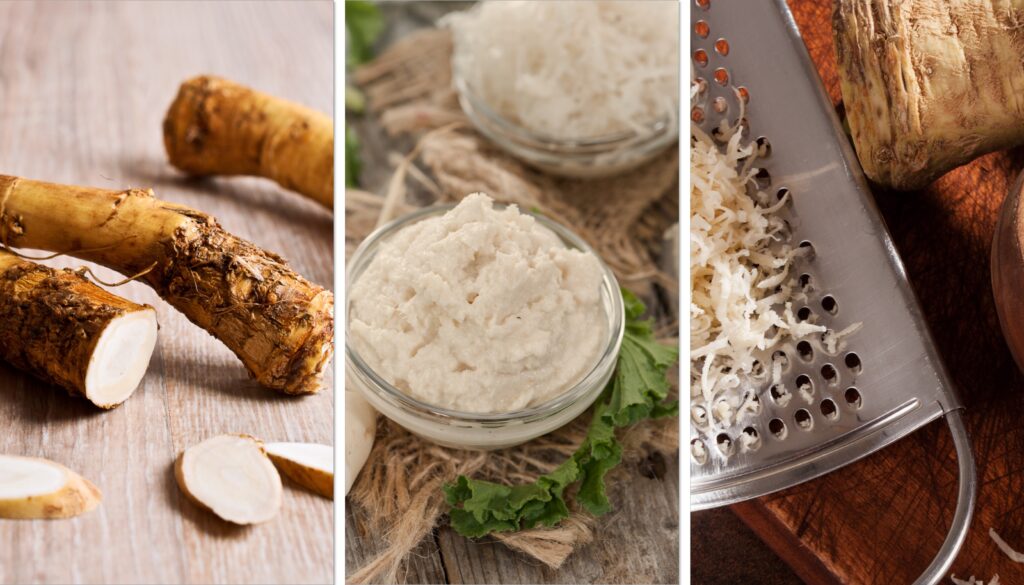
The root is the most commonly used edible part of the horseradish plant, prized for its hot, pungent flavour. Freshly grated horseradish releases volatile oils that give it a sharp heat similar to mustard or wasabi. It is traditionally used to make horseradish sauce, a classic accompaniment to roast beef, smoked fish and root vegetables.
Horseradish root can also be preserved in vinegar to create a tangy condiment or used in pickling and marinades to add depth and heat. In modern Scottish kitchens, it’s increasingly used to elevate mashed potatoes, soups or dips.
The young leaves are also edible, though less commonly used. They have a peppery flavour and can be added to salads, soups or cooked as a green similar to mustard leaves. They’re best harvested when young and tender, as older leaves can become tough and bitter.
The flowers, small and white, appear in early summer and are edible too, adding a subtle heat and decorative touch to salads. While they’re mild compared to the root, they make an interesting garnish.
Growing Horseradish
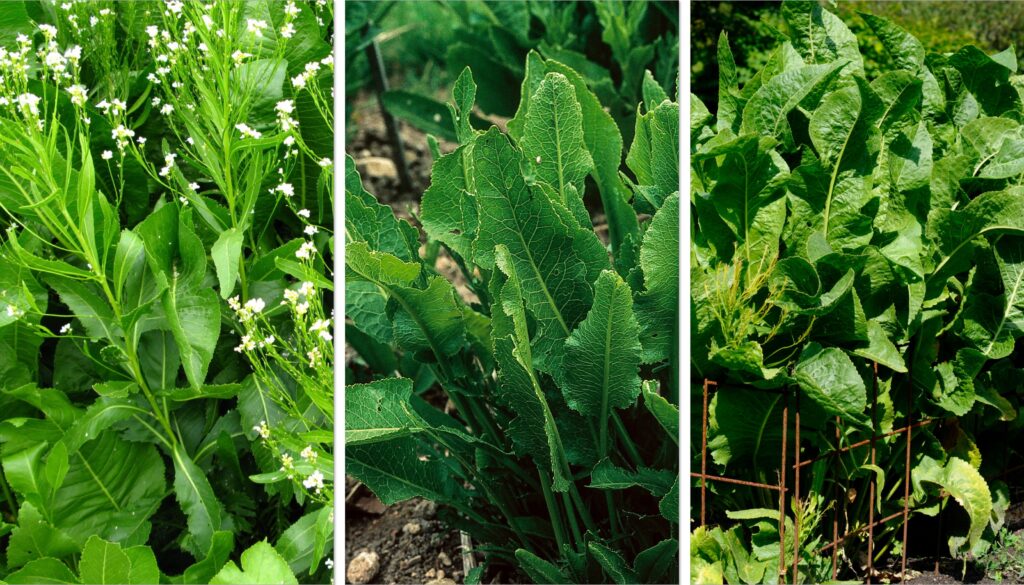
Horseradish is one of the easiest root crops to grow in Scotland. A perennial member of the brassica family, horseradish grows from thick, fleshy roots that spread underground, producing tall, leafy shoots in Spring and Summer. The plant is exceptionally cold hardy and can tolerate frost, wind and heavy rainfall, conditions often found in Scottish gardens.
Once established, horseradish requires little maintenance, but it is important to choose its planting site carefully. The plant spreads aggressively via its deep roots and can become invasive if left unchecked. Many gardeners prefer to grow it in contained beds or large pots to prevent it from taking over. Despite its vigorous nature, horseradish rewards minimal care with abundant harvests, making it ideal for both beginners and seasoned gardeners.
In Scotland, horseradish begins growing in early Spring as temperatures rise and remains productive throughout the Summer. By late Autumn, the roots are ready for harvesting, their flavour at its strongest after the first frosts.
Planting Horseradish
Horseradish is usually propagated from root cuttings known as “sets” rather than grown from seed. Seeds can be unreliable, while sets guarantee plants identical to the parent variety. The best time to plant horseradish in Scotland is in early Spring (March to April) or Autumn (September to October) when the soil is moist but not waterlogged.
To plant, prepare the soil by digging deeply and removing stones and weeds. Horseradish prefers a loose, friable texture to allow its roots to expand freely. Plant sets about 30 cm (12 inches) apart and 5–10 cm deep, angling them slightly downward so the top end sits just below the surface. Water thoroughly after planting to help the roots settle.
For gardeners concerned about the plant spreading, grow in a large container, use a large pot at least 40 cm deep filled with a mix of garden soil, compost, and grit for drainage. Ensure containers have drainage holes, as stagnant moisture can cause root rot.
Caring For Horseradish
During the growing season, you can remove damaged or yellowing leaves to maintain air circulation and prevent fungal issues. Cutting back excess foliage in late Summer may help concentrate flavour in the roots.
After the growing season ends, the top growth will naturally die back in Autumn, and this can be cut to ground level once it yellows. The plant will regrow from its roots the following Spring.
Once established, it requires little attention beyond occasional watering during prolonged dry spells and annual mulching, Caledonian Green Goodness is a good plant mulch. The plant’s deep roots make it naturally drought tolerant and resilient against heavy rain, though it prefers consistent moisture for optimal growth.
Weeding is necessary during the early stages of growth, but once mature, horseradish’s dense foliage shades the ground and suppresses most weeds. A thick mulch of compost in Spring keeps the soil fertile and prevents moisture loss.
Harvesting typically takes place from October through December. Use a fork to lift the roots carefully, avoiding damage. Once harvested, roots can be stored in damp sand in a cool shed or fridge for several months. For a continuous supply, leave some roots in the ground to resprout the following year.
Dividing Horseradish
Dividing horseradish every few years is essential to prevent overcrowding and to rejuvenate growth. In Scotland’s fertile, moist soils, the plant can spread quickly, so regular division also keeps it under control. The best time to divide is in Autumn after harvesting or in early Spring before new shoots appear.
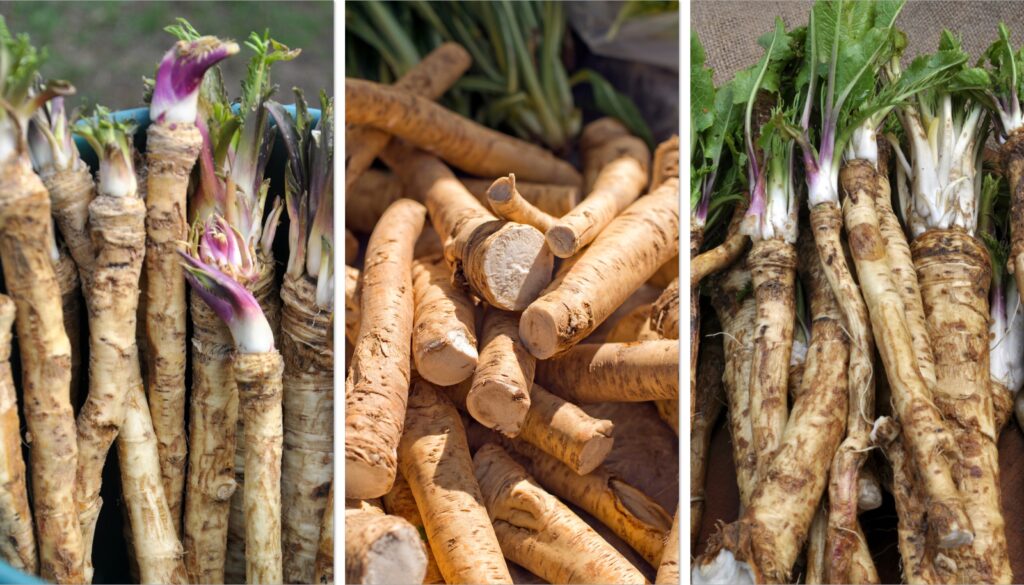
To divide, carefully lift the root mass using a fork, shaking off excess soil. Choose strong, pencil thick roots and cut them into 15–20 cm sections, each with a visible bud or eye. Replant these divisions in prepared soil or containers, spacing them adequately to allow for future growth.
Division not only helps manage horseradish’s spread but also produces fresh, vigorous plants that yield stronger roots. It’s also an excellent opportunity to harvest older roots for culinary use while replanting younger sections for the next season.
Companion Planting With Horseradish
Horseradish makes an excellent companion plant thanks to its pest repelling properties. The pungent compounds in its roots and leaves deter a range of harmful insects, making it a valuable ally in organic and permaculture gardens.
Best companions:
Potatoes: Horseradish is traditionally planted at the corners of potato beds to deter beetles and improve resistance to disease.
Fruit trees (especially apple trees): Planting horseradish near the base of apple trees can help ward off fungal infections and repel insects.
Carrots and parsnips: Horseradish’s scent helps deter carrot root fly and other soil pests.
Beetroot and brassicas: Benefit from its pest deterring qualities without competing heavily for nutrients.
Avoid planting horseradish too close to legumes such as peas and beans, as its strong root system can interfere with their shallow roots. Additionally, its vigorous growth may overwhelm more delicate herbs or small leafy vegetables, so give it ample space or grow it in a designated bed.
With minimal maintenance, horseradish will return year after year, providing a reliable supply of flavour packed roots and lush foliage. Its deep taproots enhance soil structure, while its natural defences make it a useful companion for other crops. Few plants combine flavour, resilience and ecological value as successfully as horseradish, a true heritage crop that deserves a place in every Scottish garden.
Katrina & Clayton
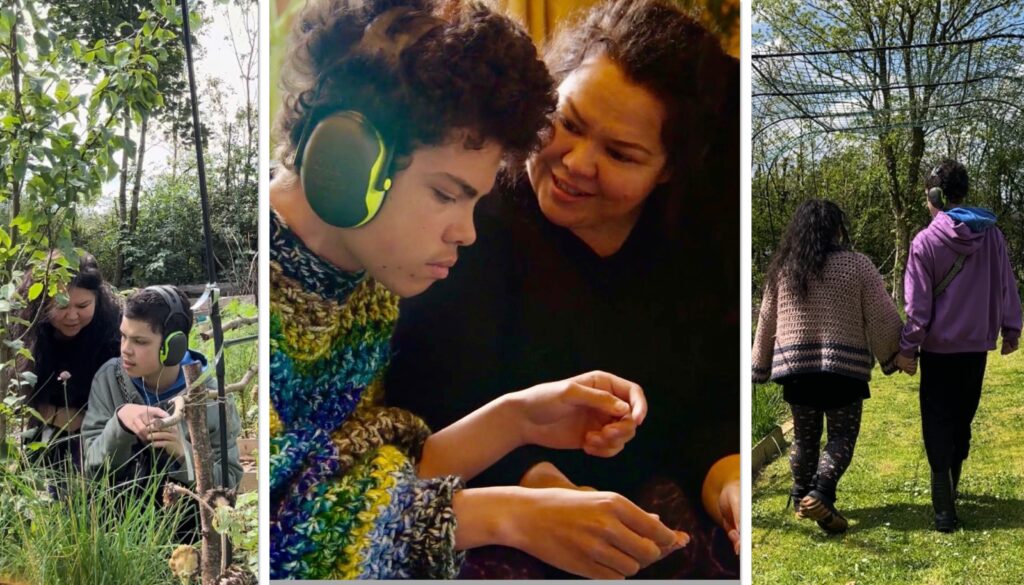
Katrina & Clayton live with their family in East Ayrshire in Scotland and share their daily life in the garden on instagram @buildingfoodforest_scotland. They practice permaculture principles, reducing & repurposing waste whenever they can. Katrina shows how home educating in nature has helped Clayton thrive.
Clayton Completed The Grow and Learn Course with the Royal Caledonian Horticultural Society in 2022. This year he will be completing Level 2 Nurture Course. Clayton is 16, Autistic, Non Verbal & has been Home Educated for the last 6yrs. Both Katrina and husband Peter have studied the Permaculture Design Course PDC and PDC Pro over the last 5yrs, developing their garden from grass to an ongoing food forest.
They have featured on BBC Beechgrove Gardens, Gardeners World Magazine and write for Scotland Grows Magazine. Katrina has a series of children’s story books out following the life of Clayton in the garden. Available at Amazon.
See more and follow Katrina & Clayton at the links below:

Hi, thanks for writing this. A friend of mine gifted me a horseradish plant and I dug some of the roots up in October. Do you think the plant will come back if I left some roots in the ground or best to buy another set to plant? Thanks